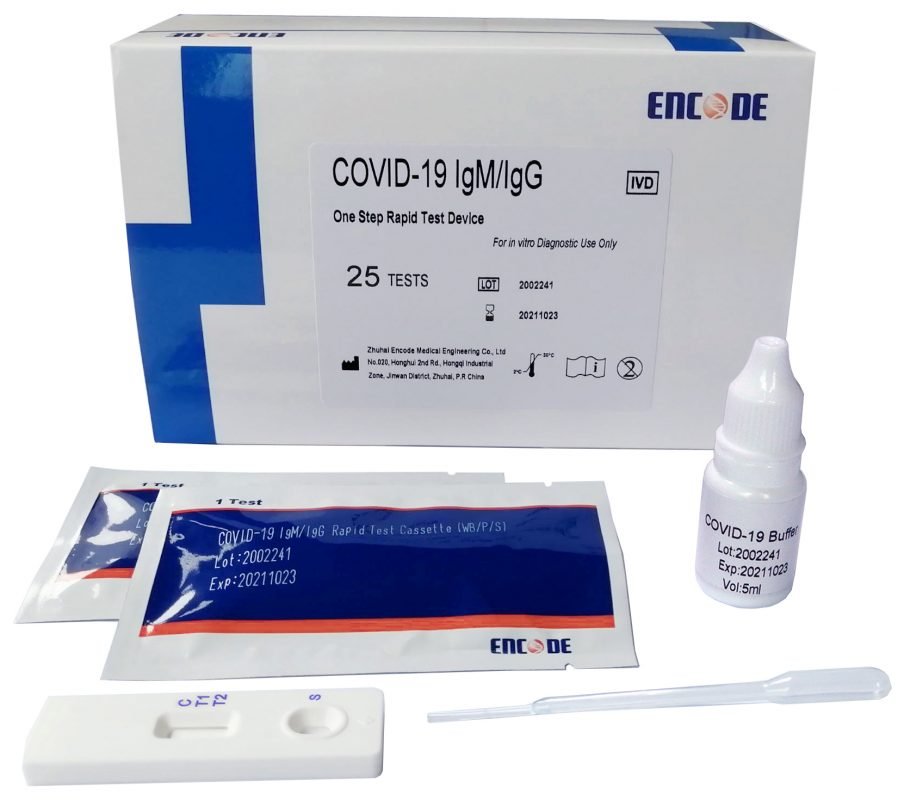
The rapid test kit provides results as quick as 15 minutes, but it should not be used as the sole criterion for a Covid-19 infection. A RT-PCR test is a highly sensitive and specific test, but requires much more time and professional applications to determine the results.
“A sample is collected from parts of the body where the coronavirus gathers, such as a person’s nose or throat. The sample is treated with several chemical solutions that remove substances, such as proteins and fats, and extracts only the RNA present in the sample. This extracted RNA is a mix of a person’s own genetic material and, if present, the coronavirus’ RNA.
The RNA is reverse transcribed to DNA using a specific enzyme. Scientists then add additional short fragments of DNA that are complementary to specific parts of the transcribed viral DNA. These fragments attach themselves to target sections of the viral DNA if the virus is present in a sample. Some of the added genetic fragments are for building DNA strands during amplification, while the others are for building the DNA and adding marker labels to the strands, which are then used to detect the virus.
The mixture is then placed in a RT-PCR machine. The machine cycles through temperatures that heat and cool the mixture to trigger specific chemical reactions that create new, identical copies of the target sections of viral DNA. The cycle repeats over and over to continue copying the target sections of viral DNA. Each cycle doubles the previous amount: two copies become four, four copies become eight, and so on. A standard real time RT-PCR setup usually goes through 35 cycles, which means that by the end of the process, around 35 billion new copies of the sections of viral DNA are created from each strand of the virus present in the sample.
As new copies of the viral DNA sections are built, the marker labels attach to the DNA strands and then release a fluorescent dye, which is measured by the machine’s computer and presented in real time on the screen. The computer tracks the amount of fluorescence in the sample after each cycle. When the amount goes over a certain level of fluorescence, this confirms that the virus is present. Scientists also monitor how many cycles it takes to reach this level in order to estimate the severity of the infection: the fewer the cycles, the more severe the viral infection is.”
Credit of : https://www.iaea.org/newscenter/news/how-is-the-covid-19-virus-detected-using-real-time-rt-pcr